

Blog
SaaS vs PaaS: Key Differences

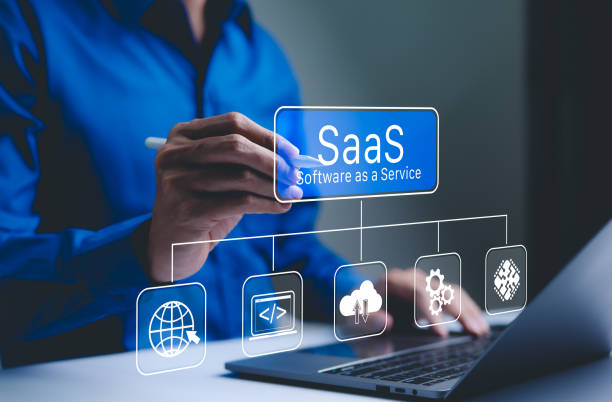
SaaS vs PaaS
There is a transformation of the way business operates software due to cloud computing. Businesses do not require to purchase giant servers or operate sophisticated structures internally. Rather, they are able to utilize cloud services which are scalable, cheap and flexible. Software as a Service (SaaS) Software as a Service (SaaS) is a type of cloud where data are stored on a shared server operated by the vendor, who supplies subscription services and functionalities to clients. Learning SaaS vs PaaS: Key Differences will enable entrepreneurs, developers and decision-makers to select the appropriate solution. We are going to elucidate of simple words SaaS vs PaaS: Key Differences in these words. You will be informed about how each model operates, to whom the model is suitable and how to choose between them which one will suit your objectives.

What is SaaS?
All three companies (Google, Microsoft and Salesforce) provide SaaS.
Software as a Service (SaaS) provides essentially prepared software provided online. It is not installed in your computer. All you do is to log in using a browser. The provider is the one that takes care of it. This consists of updates, servers, security, and backups. You are simply focusing on the use of the software.
Such solutions as Google Workspace and Microsoft 365 are SaaS solutions, by example. You are required to pay monthly fees or yearly fees. You use email, documents and collaboration tools on line.
SaaS is ideal in the case of any business desiring easy and quick solutions. It does not require an IT team to support the system. The provider deals with technical activities. This saves time and eliminates stress.
What is PaaS?
Popular PaaS Solutions include Heroku, Google Cloud and Microsoft Azure.
Platform as a Service, also known as PaaS, provides programmers with a platform on which to create and deploy applications. It does not offer off-the-shelf software to regular customers. Rather it provides an application, infrastructure, and platform within which developers are able to do custom apps.
PaaS places servers and infrastructure under the control of the provider. The applications are managed by the developers. It is to say the least that you can control the way your app operates. You will be able to make it fit to your specific business requirements.
The PaaS is designed to suit those companies that develop software products. It speeds up development. It reduces hardware costs. It helps in teamwork on the development front.
SaaS vs PaaS: Major Differences between Simple Terms.
- Control is the most important aspect when comparing SaaS vs PaaS: Key Differences.
- SaaS provides you with complete software. You use it as it is. It is out of its fundamental framework.
- PaaS provides you with a development platform. BETA You create your software in it. You are the one to determine the appearance and functionality of the end product.
Technical skill is another significance in SaaS vs PaaS: Key Differences. SaaS does not need much technical expertise. PaaS needs a programmer with knowledge in coding and system architecture.
Cost structure also matters. SaaS tends to be fixed subscription. Depending on the usage, storage, and computing power, PaaS can be of different costs.
Who Should Choose SaaS?
SaaS is usually desirable to small businesses. It is also favourable to startups. They desire quick and do not want to make huge investments. SaaS enables them to start doing business swiftly.
SaaS can be sufficient in case you want to operate emails, accounting, marketing, or customer data. You avoid hiring a big IT team. You reduce setup time.
Experience shows that in cases when they prefer simplicity, many companies turn to SaaS. Their interest lies in growth and not on technical maintenance.
Who Should Choose PaaS?
PaaS is common with tech-driven companies. It is important to software development firms. It is also beneficial to businesses that develop bespoke applications.
Advantages of SaaS
- SaaS has a fast deployment. It requires only several minutes to use up.
- It reduces upfront costs. Hardware is not required to be purchased.
- It consists of automated updates. You constantly adopt the newest version.
- It supports remote work. Tools are available everywhere the team needs them.
- These advantages render SaaS a favourite with the organizations around the world.
Advantages of PaaS
PaaS enhances the speed of development. Software developers take less time in setting up infrastructure.
- It supports collaboration. Teams are able to work within the same platform.
- It allows customization. You are able to develop distinct solutions.
- It scales easily. Resources are changed as demand increases.
- These are the strengths in this case of tech startups.
SaaS vs PaaS: Key Differences in Security
Security in the cloud computing. With SaaS, security is dealt with by the provider. You trust their systems. Protection is a high expenditure of most large providers.
In PaaS, the provider is the one that secures the platform. Nevertheless, you should lock down the created application. This is the shared responsibility model that is necessary when analyzing SaaS vs PaaS: Key Differences.
SaaS vs PaaS: Thousand and One Differences in Scalability.
Both models scale well. SaaS and Easy to upgrade plans. The user or storage can be added with the movement of a mouse.
PaaS is more extensively scaled. You scale the computing forces and storage and services. Developers will be able to optimize the performance in terms of traffic.
This is why SaaS vs PaaS: Key Differences is of particular interest to rapidly developing companies.

Real-World Use Cases
SaaS can be used by a marketing agency in relation to email campaign and CRM. They require speediness as well as dependability.
The use of PaaS may be by a software company that is developing a mobile application. They are in need of development tools and testing environments.
In either scenario, knowledge SaaS vs PaaS: Key Differences is the way to make clever investing choices.
Cost Comparison
SaaS has a predictable price. You pay per user or per month. Budgeting becomes simple.
The charge on PaaS is based on resource consumption. The higher the traffic or storage, the more the costs may go up. Nevertheless, it remains cost-effective in case of custom projects.
Knowledge SaaS vs PaaS: Why monthly fees are not the total cost of ownership Understanding is what will pin you down and affect your final decision.
Maintenance and Updates
SaaS providers do not do maintenance. The users are automatically updated. This reduces downtime.
The centrality in PaaS is that the infrastructure is automatically updated. Application updates however are dependent on your development team.
The other important section of SaaS vs PaaS: Key Differences is this area of operation difference.
Conclusion
Distributed Workforce Ready SaaS vs PaaS: Important Differences give you insights into how to match technology with strategy. Both models provide value. The correct decision is the one that is based on your team, budget, and vision on the long run. Making smarter decisions comes about when you put experience, expertise, authority and trust in your evaluation process. Cloud solutions cannot be universal. However, when you are equipped with the right knowledge, you are in a position to make a good choice.
FAQs
1. What does differ most in SaaS vs PaaS: Key Differences?
SaaS is the availability of ready-made software. PaaS gives a platform to develop software.
2. Is SaaS cheaper than PaaS?
SaaS is usually predictable in terms of pricing. The expenses of PaaS are based on application and development requirements.
3. Is it possible that a company utilizes both, SaaS, and PaaS?
Yes. A lot of business ventures integrate both models in an effort to balance the two in terms of convenience versus customization.